
Optimized memory usage as it was still growing on some systems. And added detail to the motion highlighting.
Latest Entries »
Added configuration options for eye movement minimum and maximum values with optional channels that can be enabled.
Added support for ONVIF streams.
Added a “Toss” channel, to show when movements are detected that are large enough to be interpreted as tossing and turning. If the Toss channel has a positive value, the vREM channel is disabled. The Toss Threshold determines how high the movement value must be when it kicks in and the Toss Half-life determines how quickly it fades.

Fixed memory leaks and relaxed vREM channel sensitivity.
Updated .NET Framework.
Some small updates to the INSPEC design – it now has a built-in battery and a flex cable as the proximity of the LEDs was interfering with the image quality.
Added facial detection so that it only looks for movements within a region where a face was detected.
The file haarcascade.xml can be replaced with one of these or a custom cascade classifier for better performance.
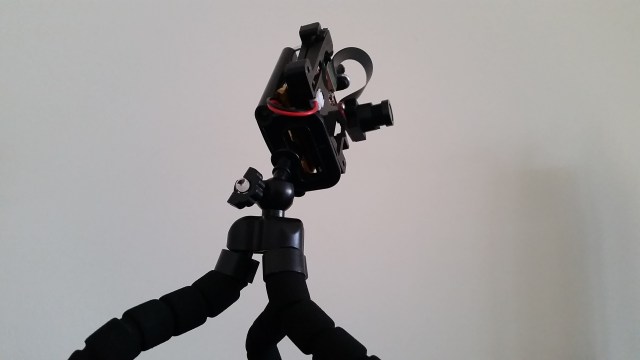
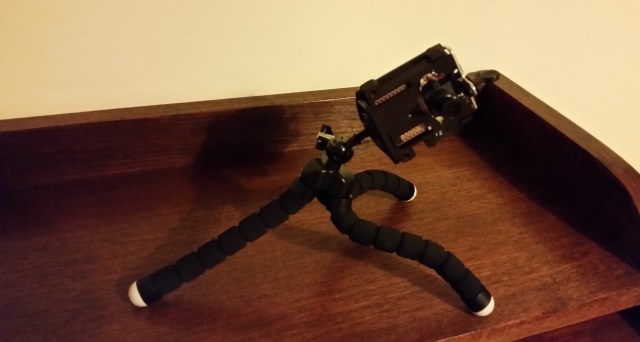
The latest version of the Halovision device; code-named INSPEC. A standalone infrared camera with a processor powerful enough to run the latest machine vision algorithms that flash LEDs when eye-movement patterns are detected after a long enough still phase. The camera case is 3D printed and installed on a flexible tripod to get a good angle. It records GIFs along with BMP stills that can be viewed the next morning via micro-USB cable.
 lucidcode