Latest Entries »

Awareness Bridge

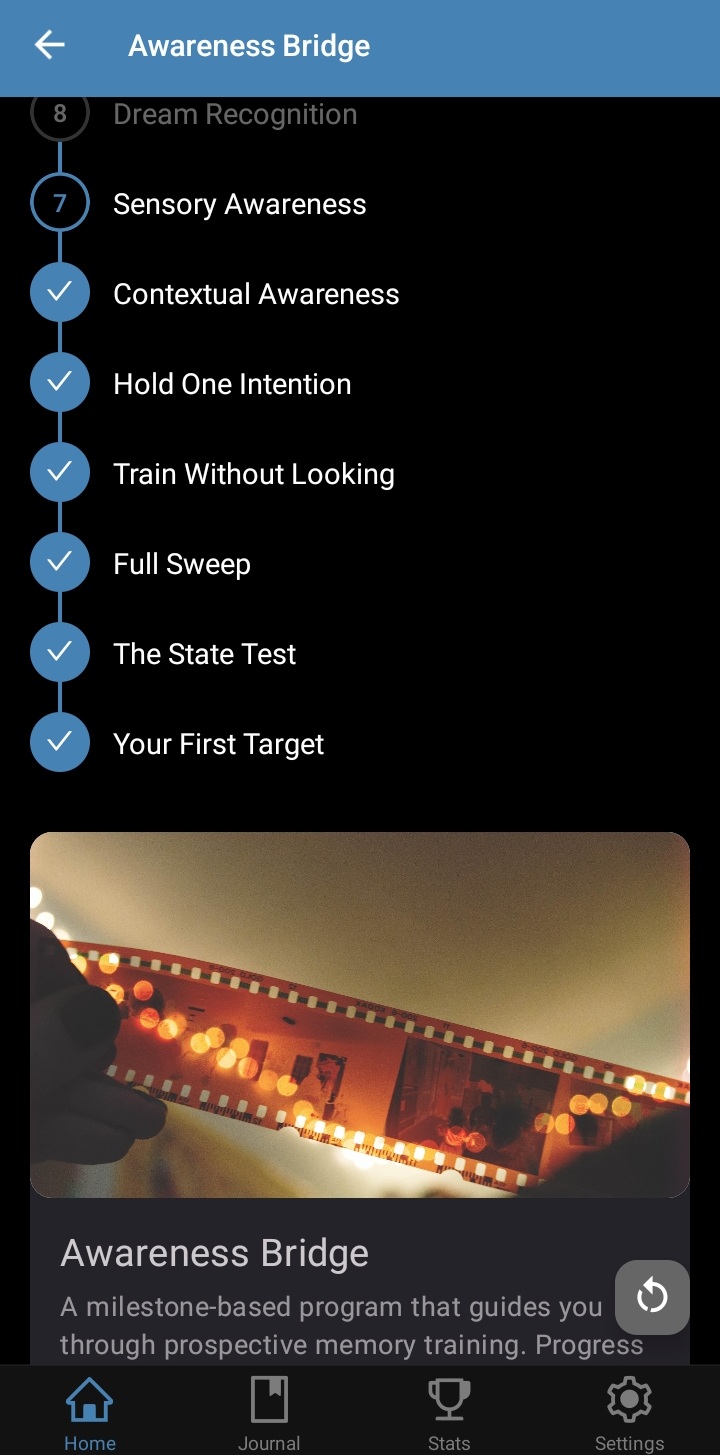
Added a program to Lucid Scribe that trains prospective memory directly. Prospective memory is the cognitive skill of remembering to do something in the future. It is the same skill you need to remember, while inside a dream, that you were going to question reality.

Each day you get a set of targets to find during the day. When you encounter one, you capture it with the camera and perform a state test.

The targets get subtler over time. You start with concrete objects… then they shift to contextual cues like reflections and shadows. These train you to notice the kinds of environmental details that become dream signs. Later the targets become sensory… notice the temperature, feel a texture, check your heartbeat… The final tier is abstract: something unexpected, a pattern repeating, or a moment of déjà vu.

The last milestone pulls targets from your own dream journal, so your personal dreamsigns become the things you’re training yourself to notice. It builds a bridge from waking awareness into dreams, one state test at a time…

Lucid Scribe Awareness Bridge Prospective Memory Training Program

Lucid Scribe iOS | Lucid Scribe Android

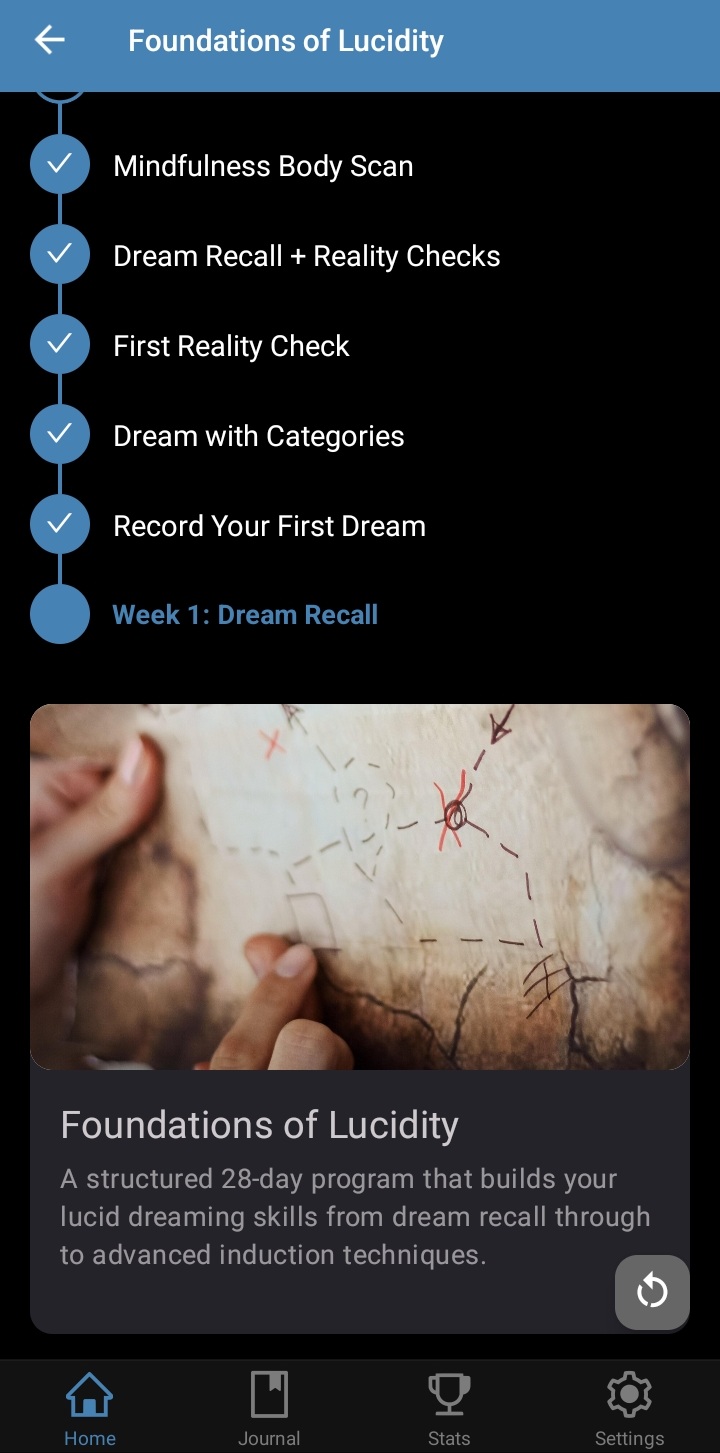
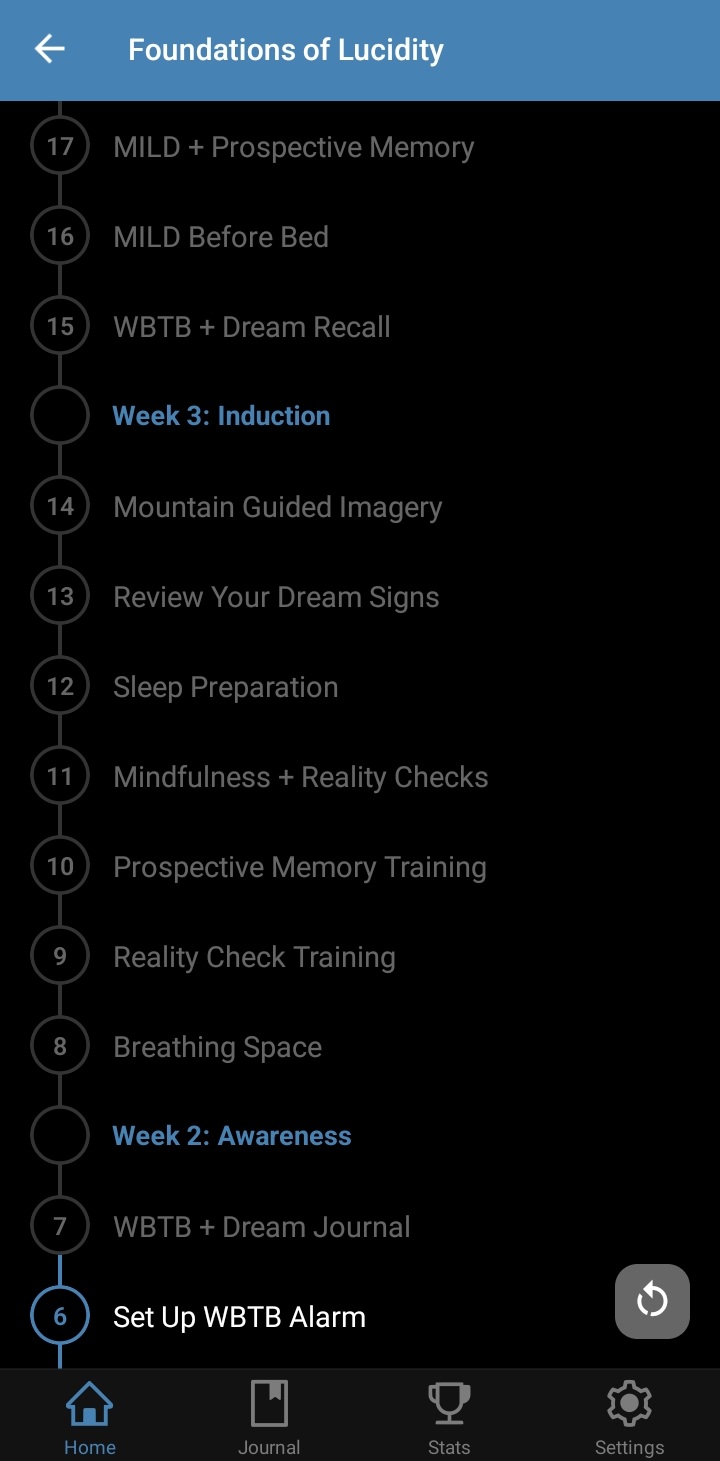
Added a 28-day lucid dreaming program to Lucid Scribe. Sequenced from dream recall through induction to advanced techniques.

Most lucid dreaming guides list techniques without ordering them. MILD, WBTB, FILD, SSILD, reality checks, journaling. All valid, but they don’t work in isolation. Dream recall has to come first and awareness training has to come before induction, or the techniques fire into a void.

Lucid Scribe Foundations of Lucidity 1 Lucid Scribe Foundations of Lucidity 2

Week 1: Dream Recall

  • Day 1. Record your first dream.
  • Day 2. Record another dream. Tag it with categories.
  • Day 3. First reality checks.
  • Day 4. Dream recall plus five reality checks.
  • Day 5. Guided body scan mindfulness exercise.
  • Day 6. Set up a Wake Back To Bed alarm.
  • Day 7. Run the WBTB alarm. Record what you recall on waking.

Week 2: Awareness

  • Day 8. Five-minute breathing space mindfulness exercise.
  • Day 9. Ten reality checks. Genuine questioning each time.
  • Day 10. Start the Prospective Memory Trainer.
  • Day 11. Breathing space mindfulness exercise plus reality checks.
  • Day 12. Thirteen-minute preparation-for-sleep body scan.
  • Day 13. Review dream stats and personal dream signs.
  • Day 14. Guided imagery before bed.

Week 3: Induction

  • Day 15. WBTB and detailed dream recall.
  • Day 16. First MILD session.
  • Day 17. MILD plus prospective memory.
  • Day 18. Guided SSILD.
  • Day 19. MILD focused on your personal dream signs.
  • Day 20. SSILD plus WBTB.
  • Day 21. Configure the Deep Playlist.

Week 4: Advanced

  • Day 22. Full protocol: WBTB plus MILD.
  • Day 23. FILD session.
  • Day 24. Targeted Dream Incubation.
  • Day 25. REM Lights.
  • Day 26. DEILD practice.
  • Day 27. Review full stats. Export the journal as a backup.
  • Day 28. Design a personal protocol from the techniques that worked.

Lucid Scribe iOS | Lucid Scribe Android

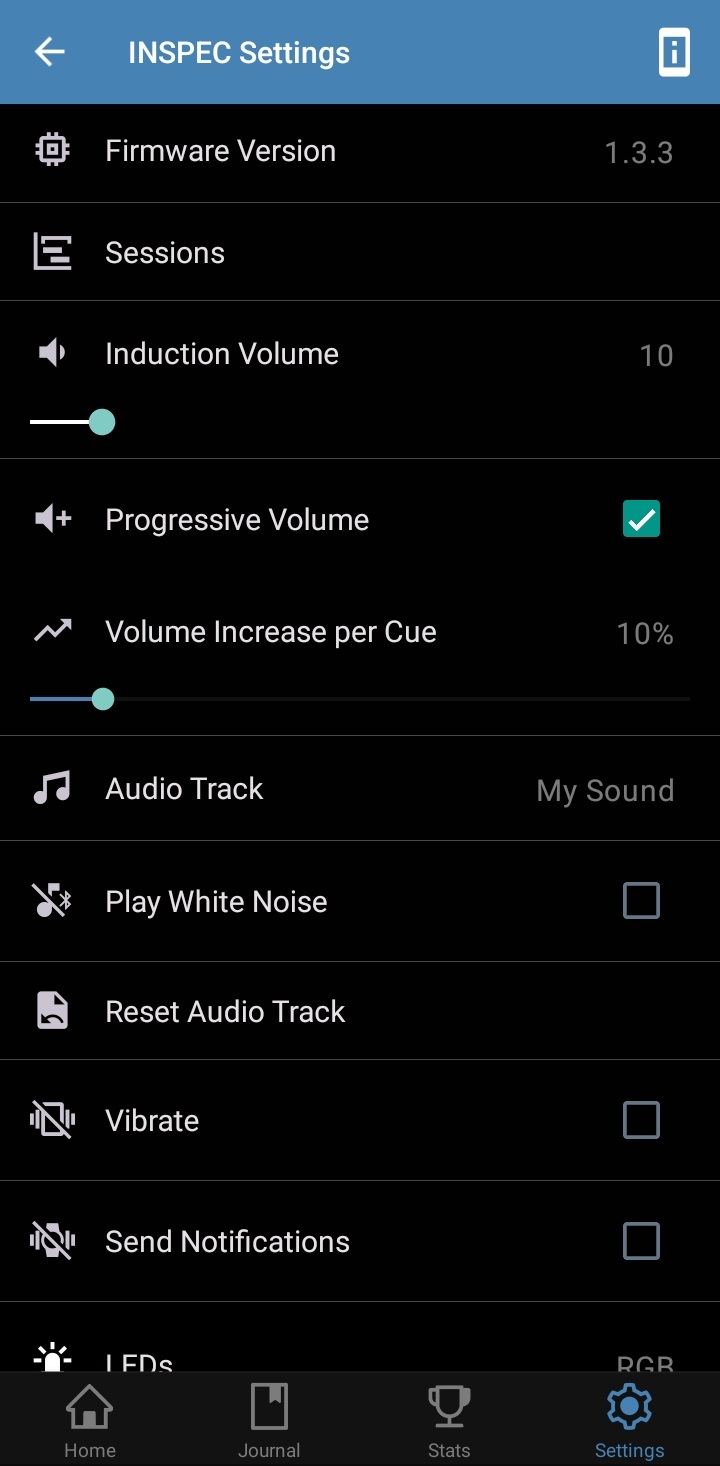
Added a new Progressive Volume option that makes each successive audio cue play slightly louder than the last. You can configure the increase amount from 5% to 50% per cue, with the volume capping at 100%. The volume is relative to the system’s media channel volume.

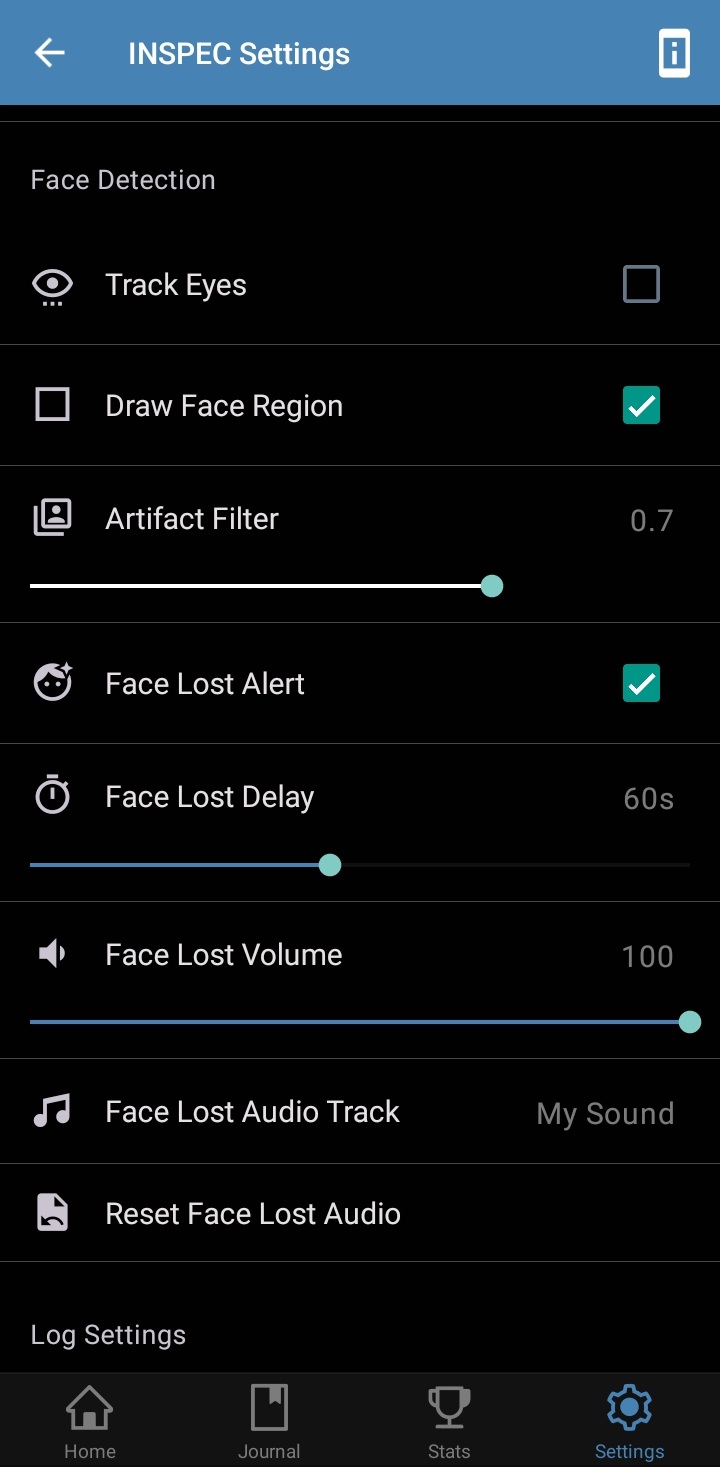
And some new settings to trigger a “Face Lost” audio cue when your face is no longer visible to the camera. This is useful for maintaining optimal positioning throughout the night.

You can configure:

  • How long your face must be absent before the alert triggers (10 to 120 seconds)
  • A separate volume level for the face lost alert, also relative to the system’s media channel volume
  • A custom audio track for the alert
INSPEC Lucid Dreaming Device Progressive Audio Cues INSPEC Lucid Dreaming Device Face Lost Detection

Over the years, Lucid Scribe has been used in more than 20 peer-reviewed publications across 15 institutions in 9 countries, some with hundreds of citations on Google Scholar. Below is a selection of these publications, organized by research area.

A comprehensive list with links to each paper is available on the INSPEC research page.

Emotion Recognition and Affective Computing

ASCERTAIN: Emotion and Personality Recognition Using Commercial Sensors
R. Subramanian, J. Wache, M.K. Abadi, R.L. Vieriu, S. Winkler, N. Sebe
IEEE Transactions on Affective Computing, 2018

“EEG data samples were logged using the Lucid Scribe software, and all sensor data were recorded via bluetooth. A webcam was used to record facial activity.”

A landmark study with over 600 citations that introduced the ASCERTAIN dataset for multimodal emotion and personality recognition using commercial physiological sensors. Lucid Scribe was used for EEG data acquisition.

View full article »

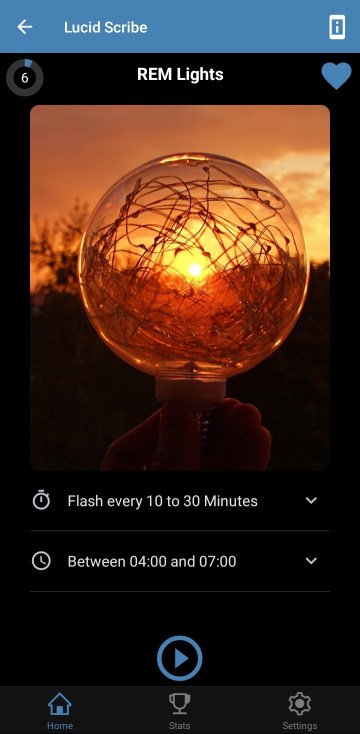
REM Lights is a new lucid dreaming induction feature in Lucid Scribe that uses your phone screen as a light cue delivery system during sleep. The screen flashes at random intervals during a configured time window, providing visual cues that can bleed into your dream and trigger lucidity.

Place your phone face-up on the bedside table and hit play. The screen goes completely dark to avoid disturbing your sleep. During the configured time window, the screen flashes with customizable pulses to deliver light cues during REM-rich periods of the night.

REM Lights - Phone Screen Light Cues for Lucid Dreaming

Settings:

  • Flash interval (e.g.: every 10 to 30 minutes)
  • Time window with minute-level precision (e.g.: 04:00 to 07:00)
  • Flash duration (1 to 60 seconds)
  • Pulse count (1 to 60 rapid blinks per flash event)
  • Flash color

Red light is less likely to wake you, while white provides the strongest cue for lucid dream induction. For best results, schedule flashes during the second half of the night when REM sleep periods are longer and more frequent. Combine with prospective memory training during the day and MILD intentions before falling asleep.

This video shows how the INSPEC can be positioned on the bedside table to detect eye movements during REM sleep, with the Lucid Scribe app running in the background and the infrared spotlight in the frame. I usually have the infrared light on the floor, aimed at the wall so the reflected light has an even distribution.

The INSPEC detects the face and eye movements better if it looks up from chest height – instead of right next to your face, and aimed slight downwards with the help of some books so that it picks up more angles, like when you are lying on your back. The face should appear upright in the video feed.

INSEPC | Lucid Scribe Android​​ | Lucid Scribe iOS

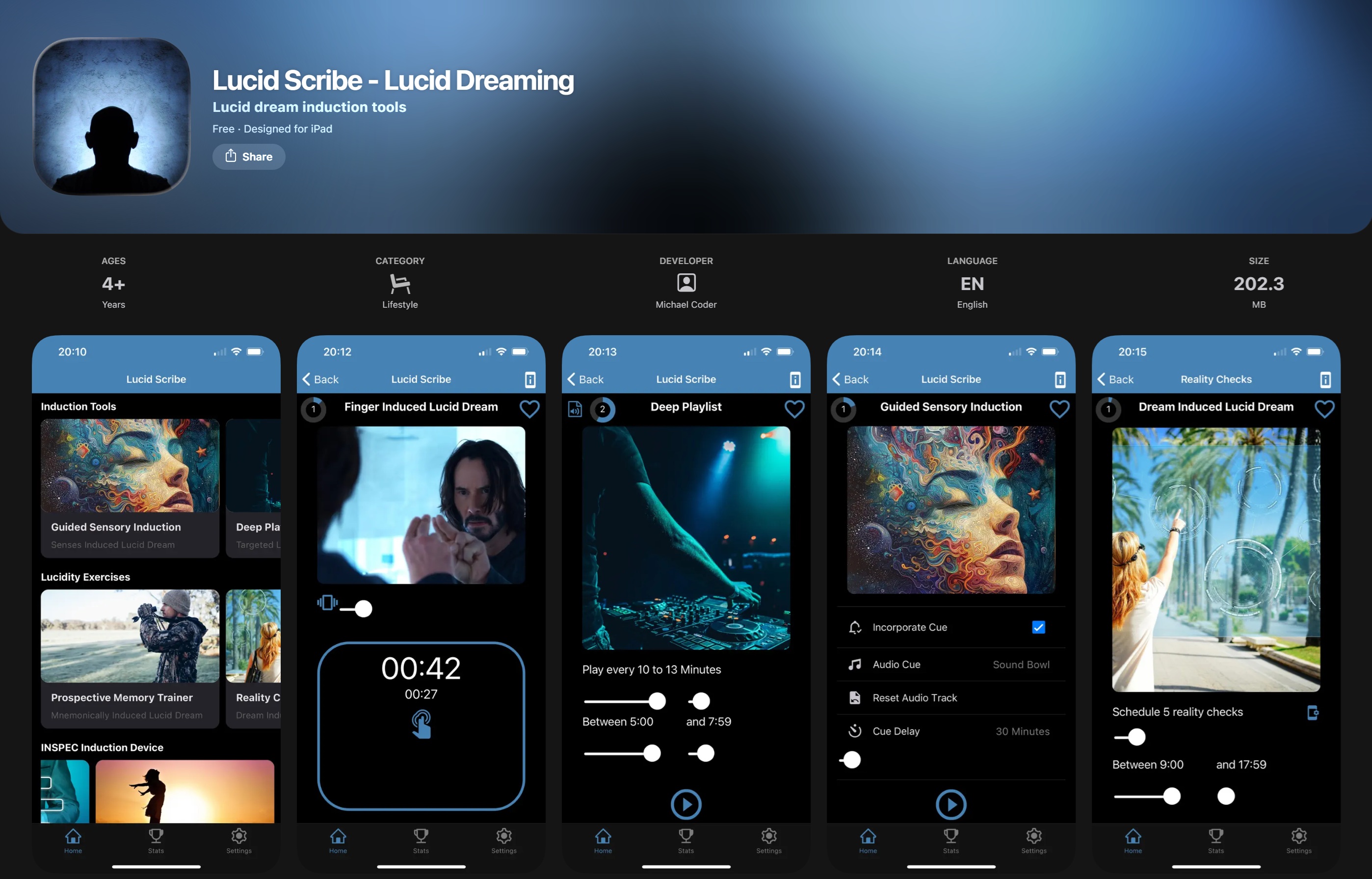
Lucid Scribe is now available on iOS!

It has real-time REM detection with the INSPEC lucid dreaming device, sleep logs with video clips of detected eye movements, NREM1 detection with FILD, guided mindfulness and sensory induction exercises, daily prospective memory training exercises, targeted dream incubation, research studies, auto-off alarms, and reality check notifications.

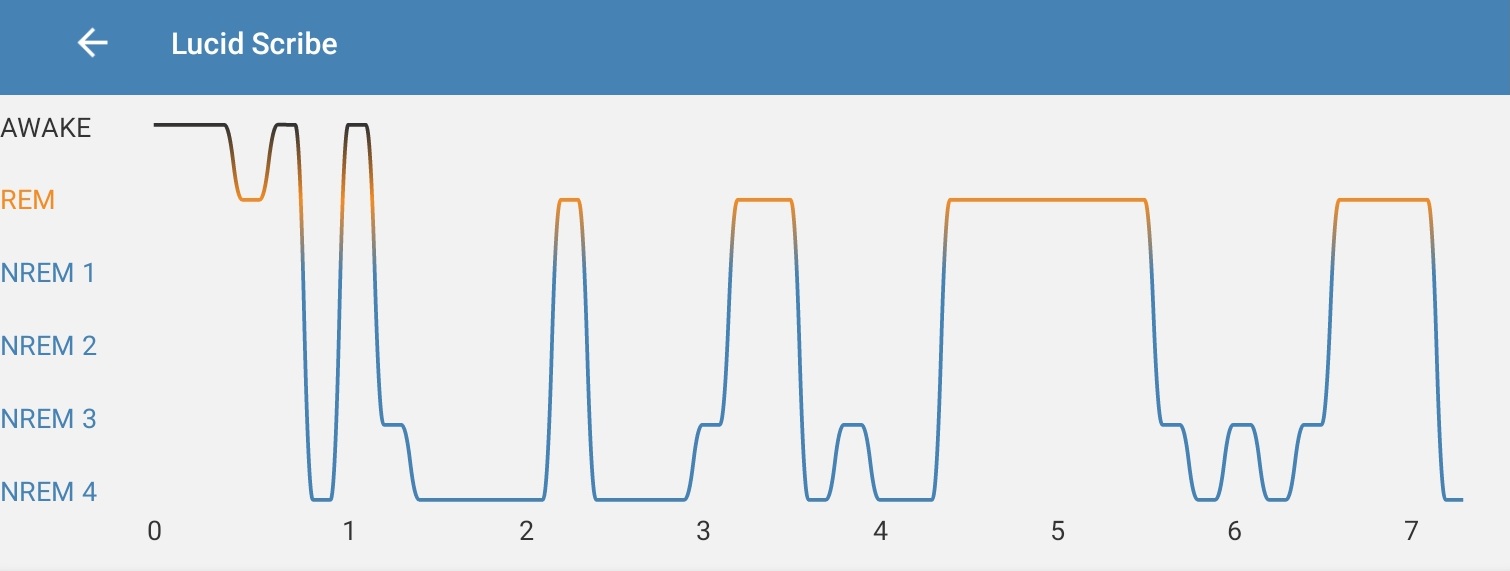
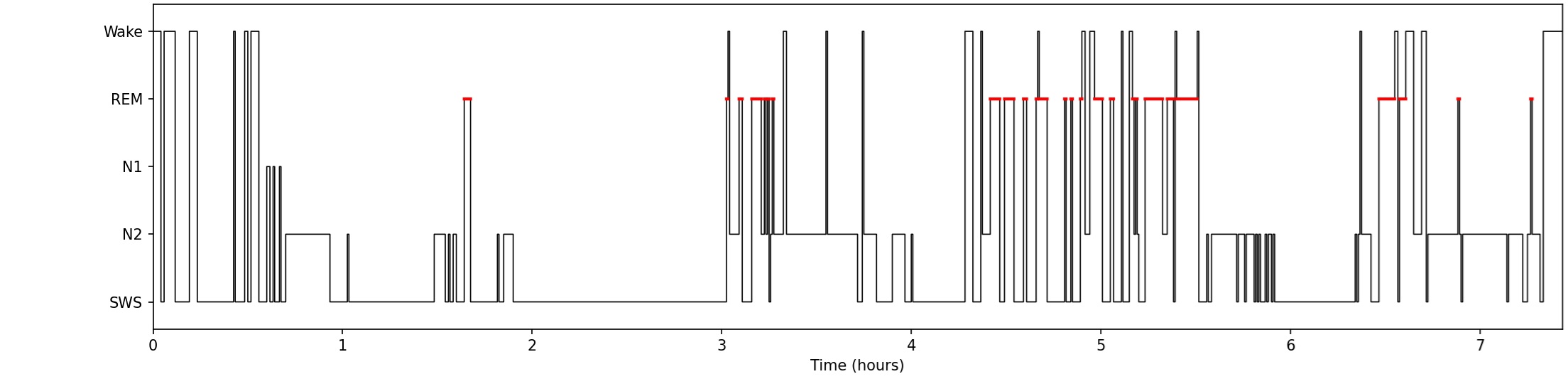
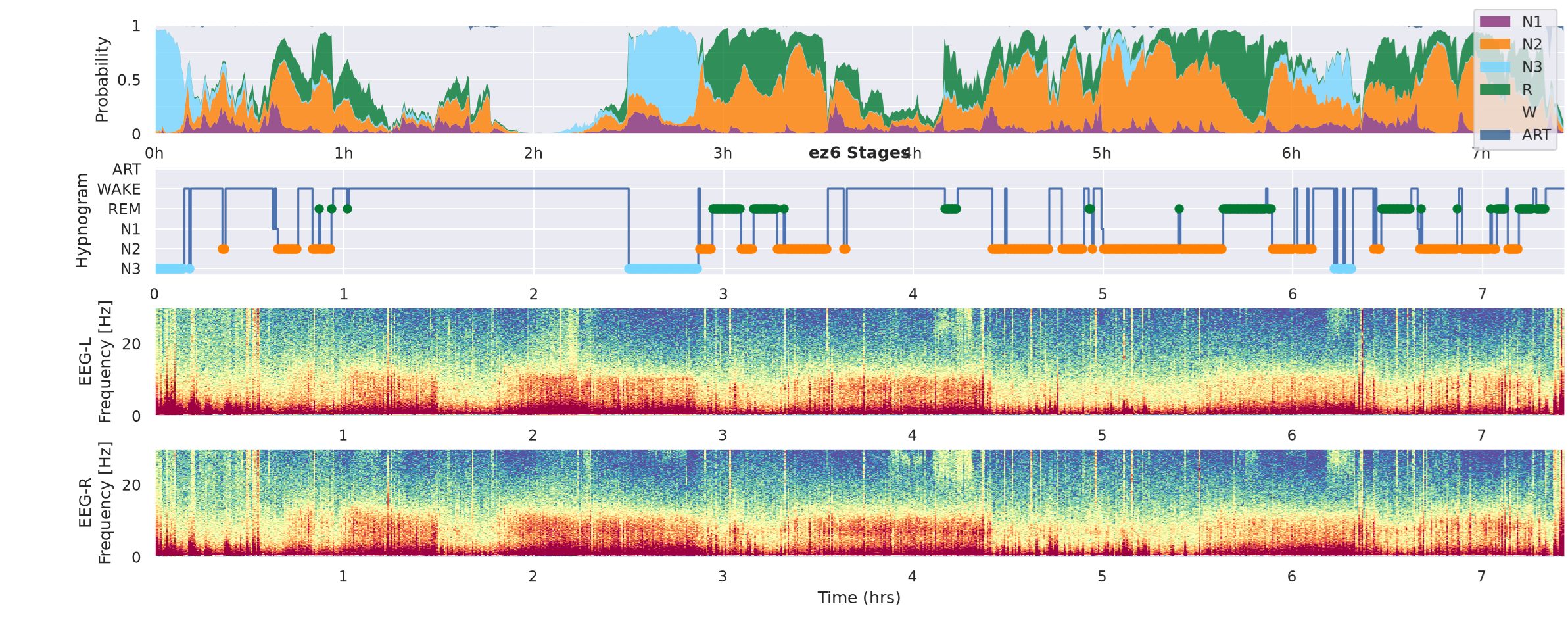
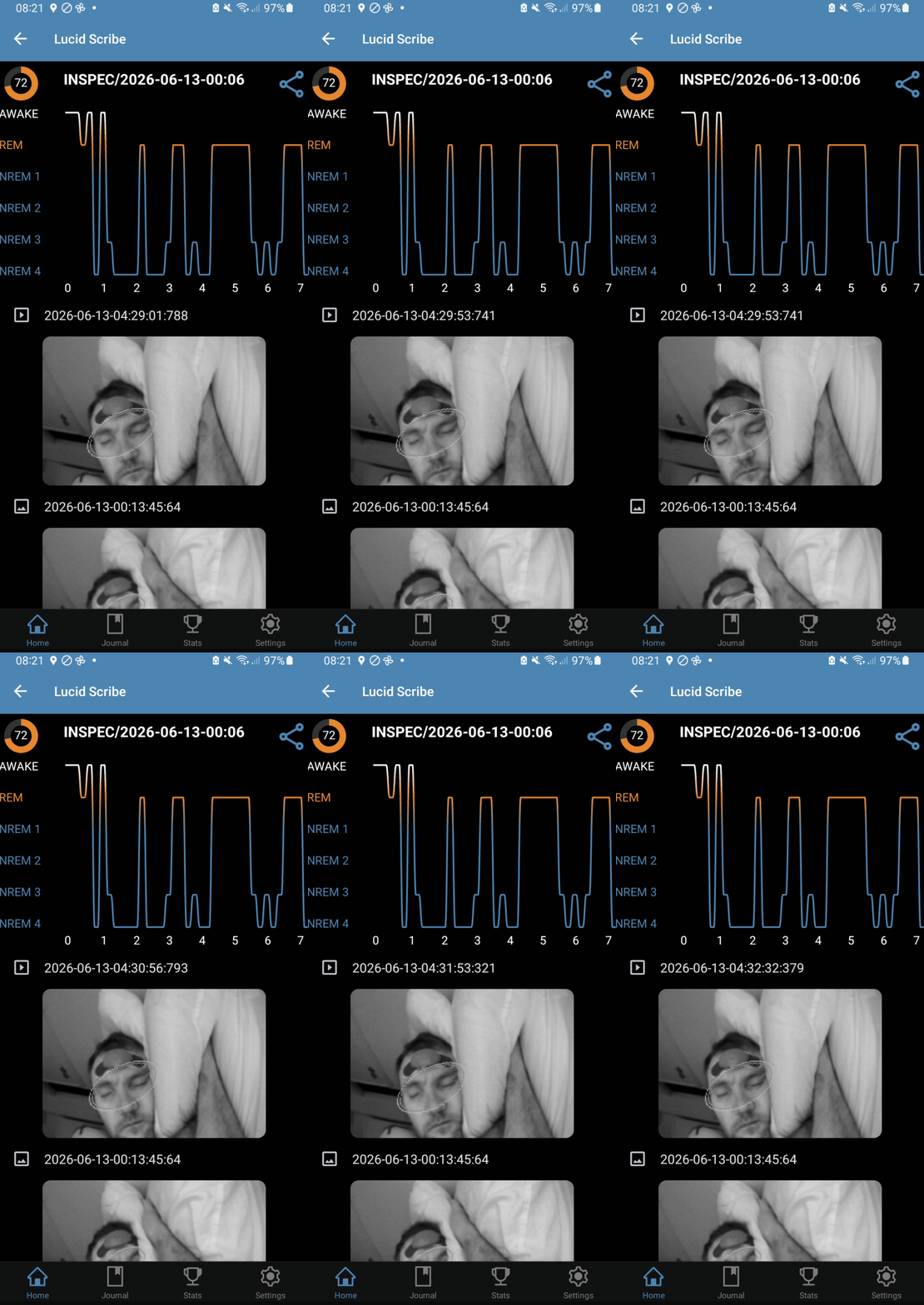
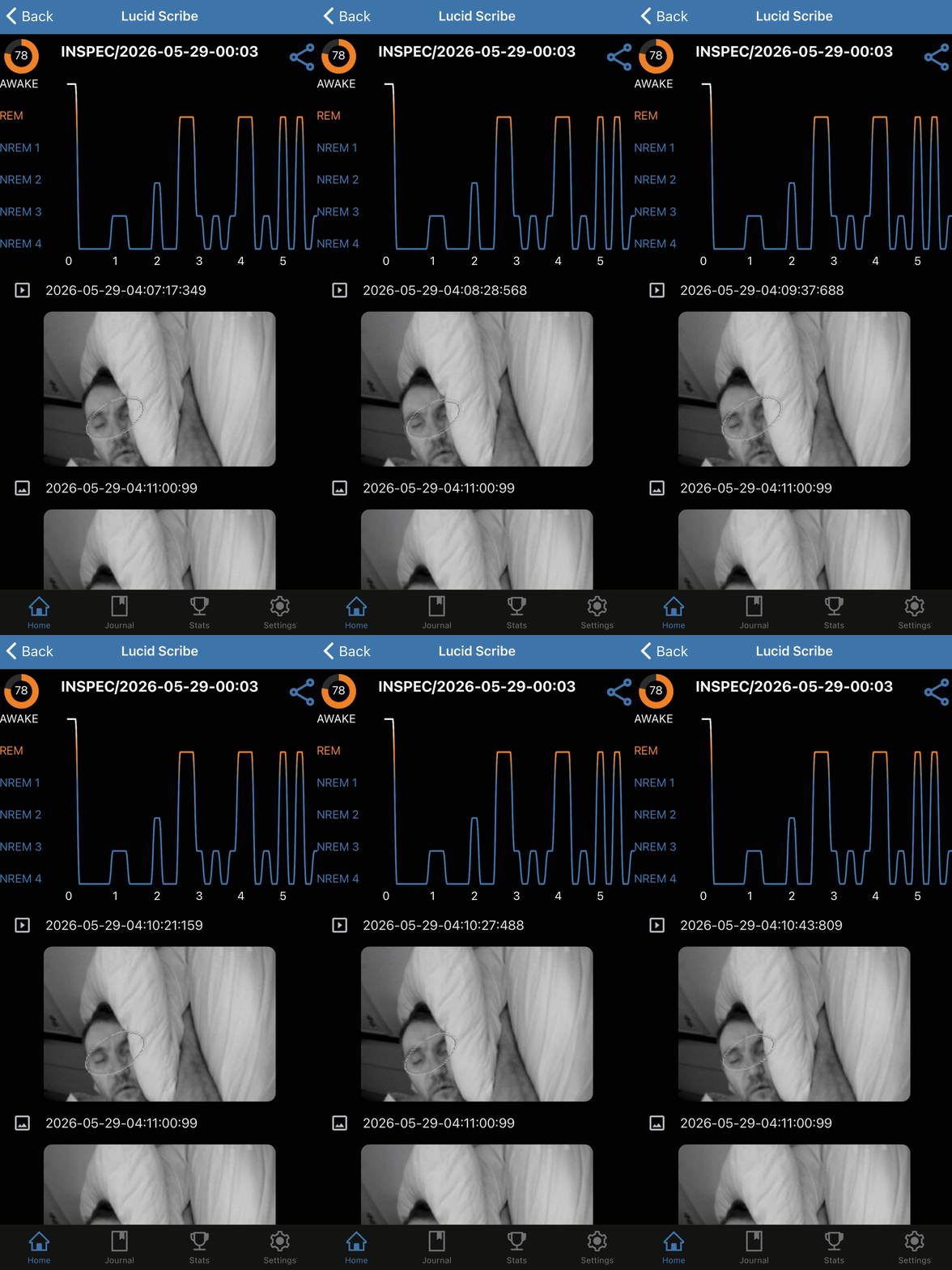
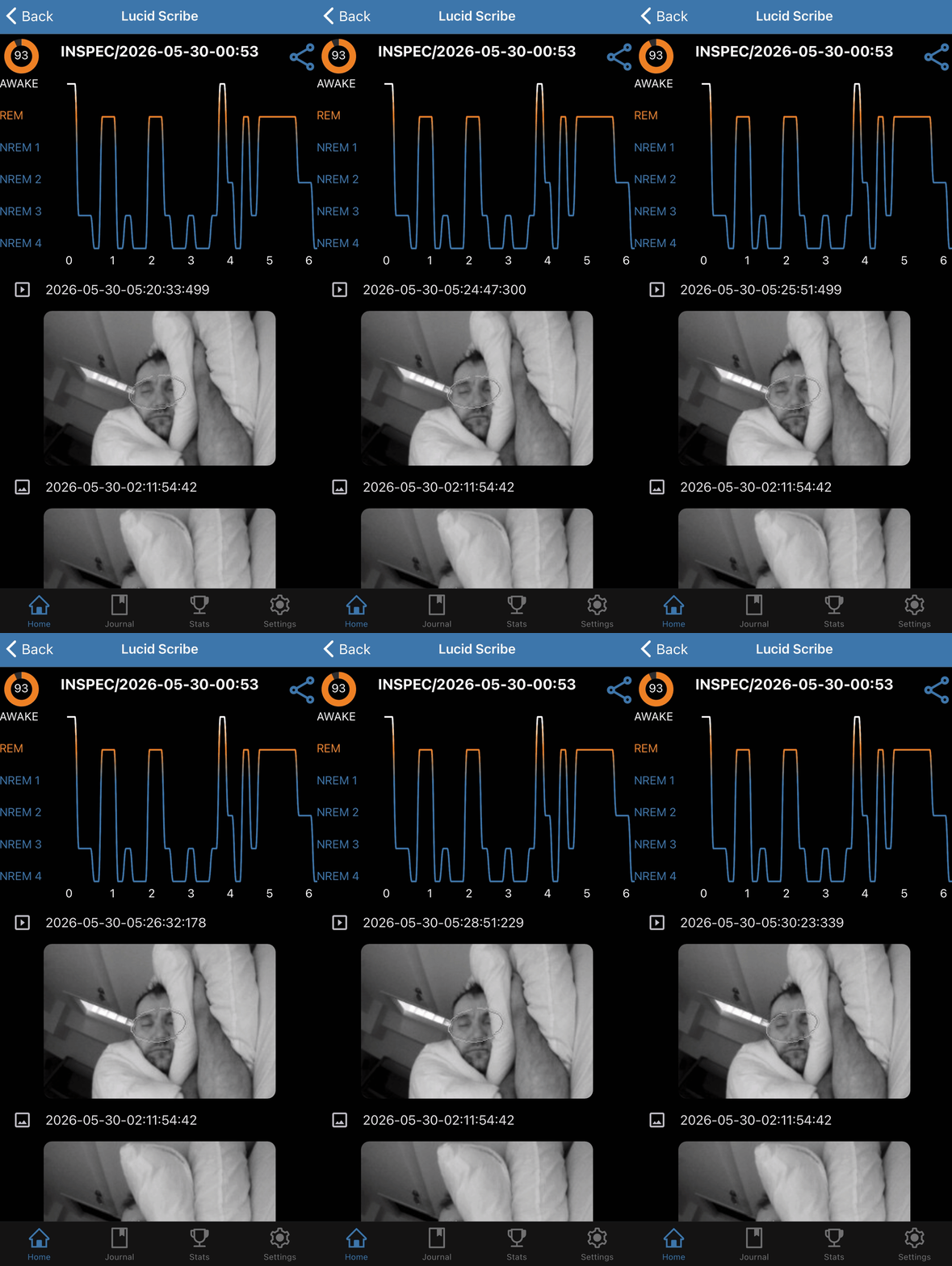
The latest INSPEC update introduces hypnograms and computed sleep quality metrics. The implementation estimates AWAKE, REM, Light Sleep (NREM1 and NREM2), and Deep Sleep (NREM3 and NREM4) phases using a combination of stillness scoring and detected rapid eye movement patterns from the video stream. Stillness is inferred from frame-to-frame pixel variance, while REM is detected through bursts of eye movement activity from the REM-detection engine.

The hypnogram output aligns well with typical sleep architecture and already offers valuable insight into session dynamics. This lays the groundwork for real-time sleep staging and deeper analysis to optimize cue timing relative to vivid dreams during REM sleep.

There is still lots planed, like adding indicators for when the REM-detection algorithm triggered the audio cues and caching for faster load times, but it is already yielding valuable insights and fun to play with.

The top frame is animated and replays highlights from the session where rapid eye movement patterns were detected. The rest of the frames are stills that can be removed – for when you want to export to an LSD file and share the session, but were caught sleep-talking or at an awkward angle.😅

INSEPC Details | GitHub | Google Play

Added TensorFlow Edge Impulse to the INSPEC device. This improves face detection and REM detection, especially at difficult angles!

INSPEC TensorFlow Edge Impulse

Added a smart alarm that triggers when the INSPEC detects stirring movements during natural awakenings in the mornings.

INSPEC Smart Alarm