
A biofeedback signal recorder and research tool designed to detect eye movements during sleep.
Download | Documentation | Citations | Android | iOS
|
Plugins
Download or develop plugins for various biofeedback and lucid dreaming devices.
 |
CPU Monitors your machine’s CPU performance. Included. |
 |
Halovision
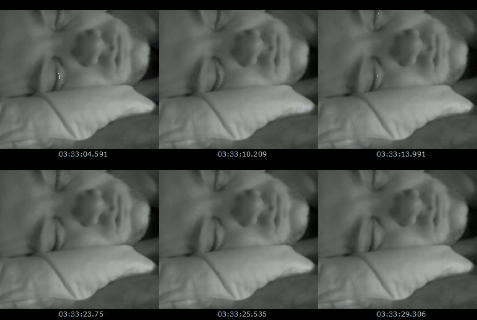
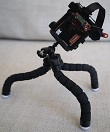
Monitors the video stream from any webcam or IP camera and the INSPEC – a night-vision camera the size of a matchbox, and measures the amount of change between each video frame. Plays plays audio tracks when rapid eye movement patterns are detected. Download | Updates | LSDBase Entries |
 |
Halograph FM Monitors the output from the halograph FM – a headband with a motion detector that is sensitive enough to pick up the heartbeat. The plugin plays an audio track and cycles through the playlist during REM sleep. Download | LSDBase Entries |
 |
NeuroSky ThinkGear EEG Monitors the EEG data from NeuroSky ThinkGear EEG compatible devices like the MindWave and the MyndPlay BrainBandXL. Requires the NeuroSky ThinkGear Connector. Channels: – raw EEG, attention, meditation – alpha, beta, delta, gamma, theta Download | Updates | Source Code | LSDBase Entries |
 |
BrainFlow Monitors the EEG data from devices compatible with the BrainFlow library, including OpenBCI, NeuroMD, G.TEC, Neurosity, OYMotion, FreeEEG32, Muse, Ant Neuro, Enophone, and BrainAlive devices. Download | Updates | Source Code |
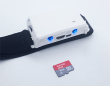 |
Hypnodyne ZMax Monitors the EEG data from the Hypnodyne ZMax and triggers audio tracks when electrical activity from the eye muscles is detected during REM sleep. Channels: – EEG R, EEG L – X, Y, Z Download | Updates | Source Code |
 |
Mouse FIELD (Finger Induced Electronic Lucid Dream) Monitors the mouse activity and plays an audio track when the mouse button is released. The idea is to catch yourself when you fall asleep – in a dream, but awake. Another channel detects eye movements from the infrared LED sensors operated out of mice. Download | Updates | Source Code | LSDBase Entries |
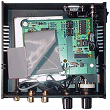 |
OpenEEG Monitors the EEG data from devices compatible with the OpenEEG project like the Olimex EEG SMT and the halograph EEG. Download | Updates | LSDBase Entries | Source Code | FTDI Driver | RegEdit |
 |
Keyboard Measures and graphs the keyboard’s words per minute. Download | Updates | Source Code |
 |
Microphone Monitors the volume of the default microphone. Download | Updates |
 |
Pranayama Outlines breathing patterns that can be followed by keeping the lungs filled at the level of the graph. The line shows the level at which the lungs should be filled and how long the breath should be retained. The first exercise is to inhale for 8 seconds, hold for 32 and exhale for 16 (a ratio of 1:4:2). Download | Updates | Source Code | LSDBase Entries |
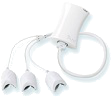 |
Wild Divine LightStone / IOM Monitors the heartbeat, skin conductivity (galvanic skin resistance) and heart rate variability from the Wild Divine LightStone / IOM. Download | LSDBase Entries |
 |
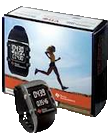
OCZ NIA Monitors a mixture of muscle, skin and nerve activity including sympathetic and parasympathetic components that can be summarized as biopotentials from the OCZ / BCInet NIA (Neural Impulse Actuator). Download | Updates | Source Code |
 |
TI Chronos EZ430 Monitors the XYZ output from the Texas Instruments EZ430 Chronos. Includes source code. Pro tip: to change the default transmission timeout (of 3600s) you need to change sRFsmpl.timeout (and SIMPLICITI_TIMEOUT): Use the Code Composer (included with the chronos) to edit one line of code in rfsimpliciti.c, then build it for the frequency for the device (e.g.: 433Mhz) and use the TI Control Center to wirelessly update the firmware. Download | Updates | LSDBase Entries | Source Code |
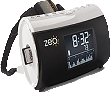 |
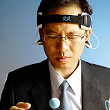
Zeo EEG Monitors the EEG and sleep stage data from the Zeo. You would have to hack the device with a special version of the firmware from the Zeo Raw Data Library. Download | Updates | View Source Code | LSDBase Entries |
 |
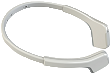
Mattel Mindflex (BETA) Monitors the EEG data from modded Mindflex headsets that have been connected via USB. Download | Updates | Source Code |
 |
InteraXon Muse (BETA) Monitors the EEG and accelerometer data from InteraXon Muse EEG devices. Download | Updates | Source Code |
Plugouts
 |
Audio Spins the next audio track in the playlist. Included with Lucid Scribe. |
| Screen LED Flashes the screen: opens a full-screen black form after a minute and then flashes the screen once a second when triggered. Download | Updates | Source Code |
|
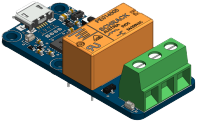 |
Yocto PowerRelay Triggers any devices wired into a Yocto PowerRelay. Download | Updates | Source Code |
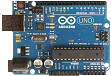 |
Arduino Triggers any devices wired into an Arduino. Download | Updates | Source Code |
 lucidcode
im sure theres a means of designing a more versatile eeg headset for sleeping with, somthing similar to those pictures of that strap around the head, also it would probably be best to implement some more electrodes into the thing, i suspect that is why the neuroskys mindwave isnt the greatest at perfect wave quality, and i guess not what i need to do the experimentalism i would like to conduct.
This is the state of the art. Halographs. To make one professionally, suit-up and get two halo headbands (one white tie, one black pullover and some iron on tape so you can make a smugglers belt in the middle for the cables and sensors). The halograph EEG has five electrodes for two channels and one for ref.
i am waiting for one in the mail, wont have it for a while still though, i just bought it for mini projects and to get a better understanding of programming for know, wouldnt want to break my only mindwave to fuck around with it and an arduino, if i ever do though, ill buy a new one.. but i really like the idea of making a different mind wave that you can sleep with, and in your dream play music that would be really interesting!! atm i just gotta figure out why im not getting a good wave signal, your plly right im guna have to use some moisturizer or somthing, im frustrated atm as to why im not getting a good perfect wave quality..
Have you followed all the steps on here:
http://support.neurosky.com/kb/mindwave/how-to-properly-wear-the-mindwave
and here:
http://support.neurosky.com/kb/mindwave/the-application-does-not-show-brainwaves-even-though-it-looks-connected?
My experience with neurosky products suggests that perfect wave quality is difficult at best to acheive. I have a mindset, which gives good quality as long as i dont move (useless for sleep for this and other reasons) i have several modded mindflex headbands, the original is downright painful and the duel uses conductive fabric which is terrible without eeg gel. Finally, i have a brainband, which i get best results with. High quality signal, though ou have to wear it rather tight, and i wake up with two red spots on my forehead.
Ouch! Do you have an OpenEEG board in the mix? I would be interested in how the quality compares to everything you have listed…
OpenEEG is next on my list of things i need. I have pretty much hit the wall when it comes to the capability of Neurosky’s chips; what I am working on is just a bit more than they are capable of at this time. Though I do look forward to their upcoming products which look to be pretty exciting, some very full-featured biometric sensor suites. I am very much a DIYer so I like OpenEEG not only for the flexibility but also the price compared to, say, an EPOC. Which I imagine would be a real pain to sleep with (not to mention a pain in the pocketbook if it broke during the night!)
im having tons of trouble with the minwave itself atm, so i aint going to be downloading nothing atm, for some reason i cant even get a good connection from my usb to my mind wave, its annoying me!! at first the signal was good then it would deteriorate then repeat that, know it wont even connect,
i keep having to adjust it, it will connect for 2 seconds then go down to 1 dot then go x, and i have to adjust it again, it wont stay high quality wave for more then a few seconds. bsbsbs
Is the ear-clip on properly? Which program are you testing it with?
i was using meditation journal, it was working really good for a couple minutes, untill i got up to shut my light off and put my computer on the deskt o try and go into deep meditation and then it cut out, and i couldnt even get it over 3 bars on speed math. and i duno i had the clip directly attacted to my ear lobe. i keep having to screw around with the forehead electrode were its touching to try and get a good wave.
Try some moisturizer… 😀
have u did nything with the mind wave and an arduino module?
No, not yet. Do you have an Arduino?
If youre experimenting with neurosky and arduino, i may be able to help, although the mindwave + arduino is a slightly more complicated setup. I think, but i am not sure, that all neurosky products output data in the same format, and the only difference is the wrapper that various language/platform specific plugins apply to the data. Perhaps the author could shed some light? Specifically, the difference between the mindflex and the mindset plugins?
I had some help from Richard for the MindFlex plugin: https://github.com/lucidcode/LucidScribe-Mattel-Mindflex/blob/master/Mattel%20Mindflex/PluginHandler.cs#L97, but I believe you are right: http://developer.neurosky.com/docs/doku.php?id=thinkgear_communications_protocol#thinkgear_packets.
i tried to download lucid scribe on my mac, but as soon as a download it and try to open it it sais cant open the file because no available application can open it. i have the mind wave but i just got it today, i barely kno how to work it, but still i should be able to download this, i just duno what to do.
I am afraid that Lucid Scribe was designed on Windows. But I was able to compile it under Mono relatively easily: http://lucid-code.com/LucidScribe/LucidScribeMono3.zip. You should be able to run it with this guide:
http://www.mono-project.com/Guide:Running_Mono_Applications. Let me know if that works for you. I am working on an Android version that you can test from here:
https://lucidcode.com/2013/11/15/lucid-scribe-android-thinkgear-eeg-beta/… I plan on releasing the iOS version as soon as the Android version is done.
so u want me to download this lucid scribe mono?
i downloaded the zip im not sure what to do next.
Hmm, I am not sure either. I started the Mono version for someone else and they got it running after a few test versions… I think you need to run a command prompt with something like “mono Lucid Scribe.exe”. It might also need the path.
well then i should just go download it on my pc, it will work a lot easyer cus i ahve windows lol! and you didnt hack me did you? this is a trustworthy site i assume? you are on the neurosky webpage…
Yeah, try it from your pc and let me know how it goes. You can trust me.
I tried replying at hackaday but it wouldnt let me >.< I would love to help test the mindflex plugin! LS wouldn't show me anything until last night when I added a serial RX line into the TGAM and loaded a sketch in my arduino that set pinMode to INPUT for pin 0 and 1 so the atmega just snoozes while the TGAM and FTDI pass data back and forth. I'm guessing that's what the hardware for the Mindflex USB mod is? If not I’m sure I can whip it together in no time at all. Oh, LS was showing me sine waves on every channel! I’m sure I got something wrong though.
I also have a Mindset which works just fine on its own with LS but having both the Mindset and Mindflex plugins at the same time is problematic (two entries in the plugins page for each band, no easy way to identify them 🙂
I have a TI chronos that I've used, I will be acquiring a brainband very soon for more experimentation, and was looking for the DIY instructions for the halograph but they seem to have disappeared?
Finally, I have a couple old photosonix light/sound machines I plan to experiment with brainwave entrainment DURING sleep to see what if any effects A/V stimulation have on brainwaves. Whew I hope I don’t get a TL:DR for this comment lol
Cool. I added a prefix to the Mindflex channels so they can be identified when running in parallel with the MindWave: https://lucidcode.com/2013/08/23/mattel-mindflex-0-9-4/. Can you post a screenshot or LSD file of the sine waves?
I cant get a screencap of what i was seeing at that time, i think what i was seeing was due to the sampling rate of the signal (which i had set WAY too high) I’ve since turned it down and now i am getting more readable results. thanks for that last update labelling the mindflex channels, makes it a lot easier to read. i’ve got some other ideas, how best to communicate about them? thanks
Sure! Best way is with a comment on the latest Mindflex post or in Lucid Scribe -> Help -> Support – Feature Request.